The Symmetrizer
Run SPI LED Data Up to 500m Over Twisted-Pair Cable
The Symmetrizer converts SPI/LSS pixel data between TTL and differential levels, allowing you to run pixel data over ordinary twisted-pair cable for up to 500m. Keep your LED controllers in one central location while connecting distant LED strips and pixel fixtures reliably. It can also be used as a signal booster between separate pixel runs.


The Symmetrizer
Differential ↔ TTL Signal Converter
The Symmetrizer converts SPI/LSS pixel data between TTL and differential signal levels. By converting the signal to differential transmission, you can run SPI/LSS data over ordinary twisted-pair cable for long distances and convert it back to TTL at the other end.
The direction is selectable by soldering two configuration pads on the board, allowing the same hardware to be used for TTL-to-differential or differential-to-TTL conversion.
Use a pair of Symmetrizers to extend the signal between a controller and a distant LED installation, or between separate pixel or strip sections where a long cable run is required.
- Converts differential signal to TTL level (de-symmetrizer)
- Converts TTL level to differential signal (symmetrizer)*
- Wide power supply range, 5–24V DC by default
- Power indicator LED
- TTL data level High/Low indicators
- Overvoltage / ESD protection on all lines and power

The Symmetrizer
The Symmetrizer Explained in 5 Minutes
How to increase the distance between your LED strip and controller.

The Symmetrizer
Your LED installation is far away from your controller
SPI works extremely well over short distances—but long cable runs can cause signal degradation, flickering and unreliable pixel data.


The Symmetrizer
How It Connects
Drop it between a controller and your first pixel run over a long twisted-pair cable, or use it as a booster between two runs further down the line.
The Symmetrizer
Use Cases
Suitable for all types of pixel LED installations—from ambient interior illumination to big outdoor installations.
The Symmetrizer
Where Long Cable Runs Happen
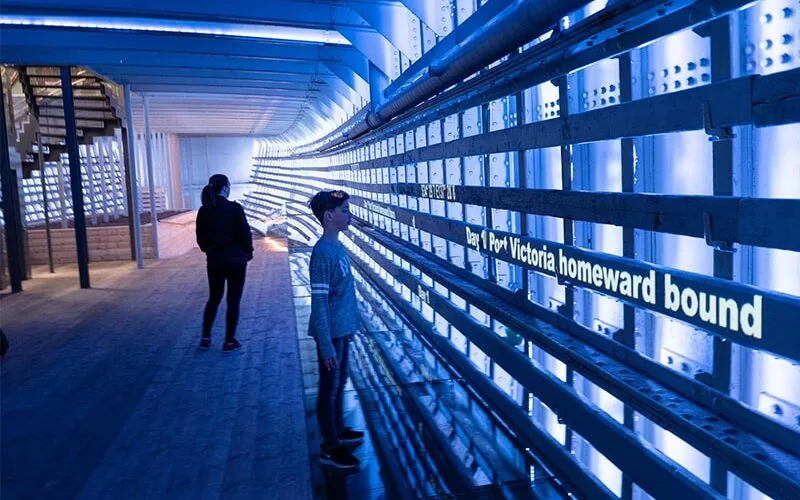
Control Room → Remote LED Installation
Controller stays in a central technical room.
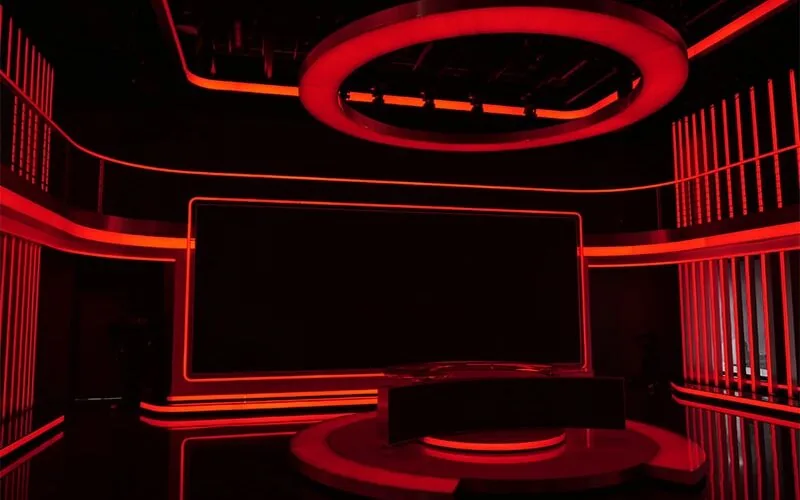
Large Architectural Installation
LED fixtures are distributed across a building or structure.
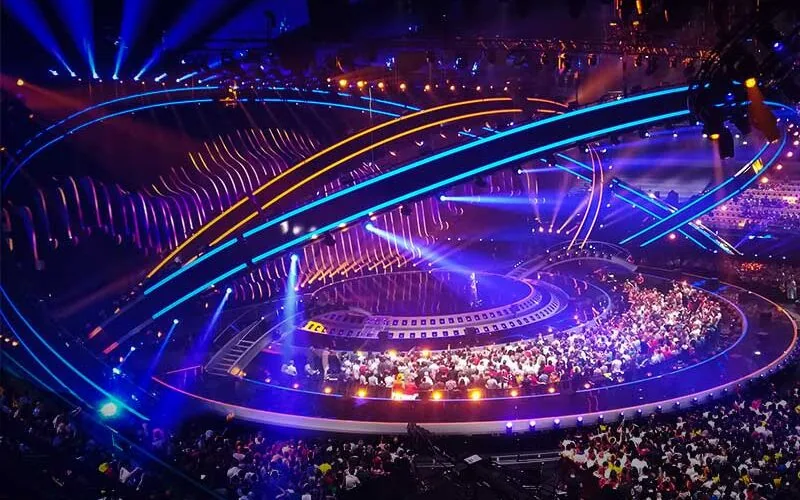
Stage / Concert Installation
Controllers remain backstage while fixtures are positioned around the stage.
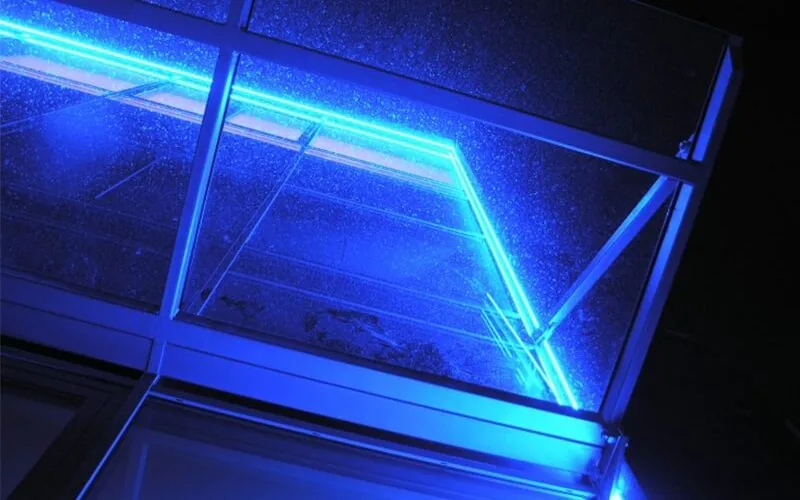
Long LED Ceiling / Corridor
Signal needs to travel between physically separated sections.
The Symmetrizer
Powerful by Design
Universal Differential ⇄ TTL Converter
Differential-to-TTL by default, or TTL-to-differential with a simple solder-pad setting.
Read More →Long Cable Runs on Twisted Pair
Converts TTL to differential and back so SPI/LSS signal survives long, ordinary twisted-pair cable runs.
Read More →Wide 5–24V DC Power Input
Runs on the same voltage as your LED strips—no separate power supply needed.
Read More →
Power & Data Status LEDs
Power indicator plus High/Low data indicators on the TTL side for quick diagnostics.
Read More →ESD & Overvoltage Protected
Both the TTL and differential ports are protected against ESD and overvoltage.
Read More →Tiny Footprint
Just 70 x 15.2 x 15mm and 10g—tucks into almost any enclosure or junction box.
Read More →The Symmetrizer
Keep the Signal Clean Over Distance
SPI signal degrades over long or noisy cable runs, and placing controllers far from fixtures normally risks data loss or flicker.
- SPI signal degrades over long or noisy cable runs
- Controllers need to sit close to the fixtures
- Extending TTL signal directly isn't reliable
- Convert to differential for long twisted-pair runs
- Keep controllers in one control room
- Convert back to TTL right at the fixture
The Symmetrizer
The Symmetrizer
Increase data range of LEDs
The Symmetrizer
FAQ
It converts SPI/LSS signal between differential and TTL levels, so you can run it over ordinary twisted-pair cable for long distances without data loss. More in Symmetrizer: Differential to TTL.
By soldering a pad on the board: not-connected gives differential-to-TTL (de-symmetrizer, the default), while shorted gives TTL-to-differential (symmetrizer). More in Symmetrizer: Differential to TTL.
Up to 500m for the SPI/LSS signal. Twisted-pair cable like Cat5e gives the best results (~100m+ per hop) versus roughly 20m+ with standard power cable. Background in Long-Distance SPI Signal for Pixel LEDs.
It is used with LEC3 or SPI Matrix, connected directly to either controller's SPI output.
For best results with LED strips, enable 'Enable symmetry for LEDs' in your controller's Advanced Output settings and save.
A 5-year limited warranty, the same as every LED Strip Studio product. Full answer in Hardware Warranty and Technical Support.
Need Help Choosing Hardware?
Tell us about your installation and we'll help you figure out where a signal booster makes sense.
Book a Free Consultation →